


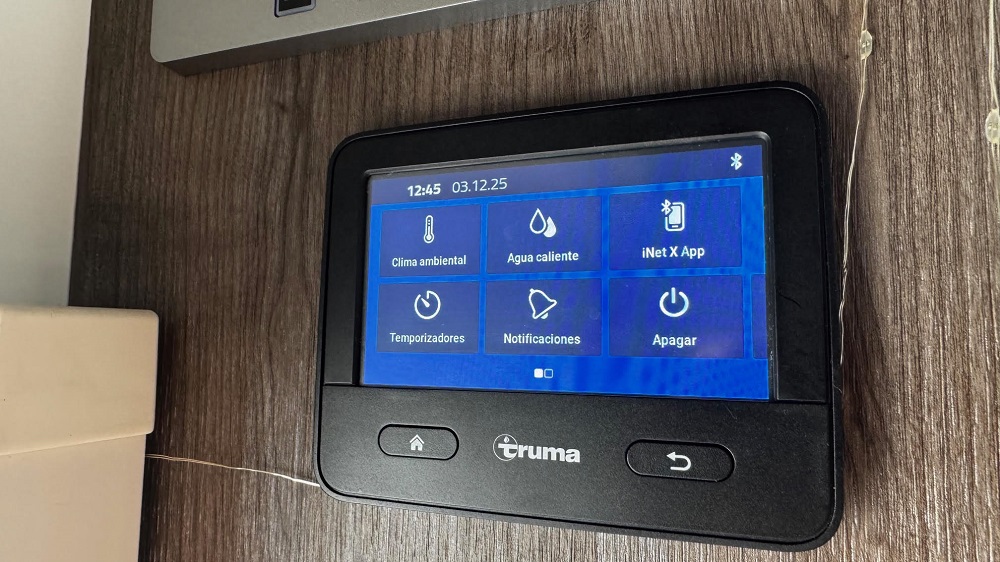
Cold nights in the mountains, a frosty dawn by the sea… for many, this would mean the end of the trip. But for you, in your motorhome, it’s just the beginning. What is the secret that turns a metal vehicle into a warm and cozy refuge, regardless of the outside temperature? The answer lies in an ingenious, often invisible, yet vital system. Understanding **how a motorhome heating system works** is not just technical knowledge; it’s the key to traveling 365 days a year in complete comfort and autonomy. We explain it step by step.
The Heart of the System: Types of Motorhome Heating
Not all motorhomes are heated the same way. The chosen system defines its autonomy, efficiency, and type of use. Identifying which one you have or should have is the first step.
Warm Air Heating (Truma, Alde, Webasto, Eberspächer)
This is the most common system in modern motorhomes. It works like a sophisticated furnace. A burner (using diesel from the vehicle’s tank or propane gas from cylinders) heats a heat exchanger. A quiet fan pushes cold air from inside the van over that hot exchanger and distributes it through flexible tubes to strategically placed outlet vents. Its main advantage is that it heats the space quickly and can include a circuit for domestic hot water.
Hot Water Heating (Alde System or similar)
This system is the king of silent, uniform comfort. Instead of air, it heats an antifreeze liquid in a boiler. This hot liquid circulates through small tubes running under the floor and in the walls (like underfloor heating in a house) and also passes through radiators. It heats objects and surfaces, not just the air, avoiding drafts and creating a very pleasant warmth. It is common in higher-end motorhomes with a more static profile.
Electric Resistance Heating
When the motorhome is connected to an external power source (at a campsite, for example), an electric water heater or portable radiators can be used. It’s an economical supplement if you have electricity, but it lacks autonomy. It is not suitable for camping in places without a hook-up.
Catalytic or Portable Butane Gas Heaters
These are an outdated solution and, nowadays, not recommended for indoor use for safety reasons. They consume oxygen from the air and produce water vapor, leading to condensation and a risk of carbon monoxide poisoning. Their use must be extremely cautious and always with ventilation.
Breaking Down the Process: How does a motorhome heating system work step by step?
Let’s take the most common system, the warm air system powered by diesel (Eberspächer/Webasto) or gas (Truma), to understand the complete cycle.
Step 1: The Heat Demand
Everything starts when you, from the digital or analog control panel, select the desired temperature. A sensitive thermostat measures the interior temperature and detects that it is below your setting.
Step 2: Burner Startup
The brain of the system (the control unit) receives the signal from the thermostat. It activates a pump that draws a small amount of fuel (diesel or gas). In a combustion chamber, this fuel is mixed with air and ignited by a glow plug. A small, controlled flame starts.
Step 3: Heat Transfer
The hot combustion gases pass through a coil or heat exchanger, heating it to high temperatures. These exhaust gases are safely expelled to the outside through a specific flue pipe. It is crucial that this pipe is always clear.
Step 4: Heat Distribution
Simultaneously, a separate fan (which does not draw combustion gases, only air from the living area) pushes air over the now-hot heat exchanger. This air is instantly heated and is forced through a network of air ducts, reaching the outlet vents distributed in the cab, living area, and sometimes the bathroom.
Step 5: The Maintenance Cycle
The thermostat keeps measuring. Once the programmed temperature is reached, the burner shuts off, but the fan may continue for a while to use the residual heat. When the temperature drops again, the cycle (steps 2 to 4) repeats automatically. This system allows for efficient operation, using fuel only when necessary.
Key Factors Affecting Operation and Efficiency
Knowing the theory is useful, but practice requires attention to these details.
Motorhome Insulation
This is the most important factor. Good insulation in the walls, floor, and ceiling (with materials like rock wool, polyurethane foam, or sandwich panels) retains interior heat and blocks outside cold. Without it, the heating system will work constantly, using a lot of fuel.
The Energy Source: Autonomy vs. Availability
Diesel (from the vehicle’s tank): Offers great autonomy. An Eberspächer system consumes between 0.1 and 0.5 liters per hour. With a 70-liter tank, you could have heating for hundreds of hours. It is independent of gas cylinders.
Propane/Butane Gas: You depend on the charge of your gas cylinders. Ideal if you also use the oven or cooker a lot. Carrying a spare is key.
Electricity (230V): Only viable with a mains connection. Perfect as a support at campsites.
Auxiliary Batteries and Electrical Consumption
Attention! Although the heat is generated by fuel (diesel/gas), the fan, fuel pump, and system electronics run on 12V electricity, drawn from the motorhome’s auxiliary battery. Prolonged use with a low battery can drain it. It is essential to have a well-maintained auxiliary battery and charge it via solar panels, the engine alternator, or a mains hook-up.
Ventilation and Condensation Control
Heating without ventilation produces condensation (mist on windows, dampness on walls). Modern systems allow adjustment of fresh air intake. It is advisable to keep a ventilation gap open and use passive dehumidifiers for a healthy environment.
Practical Tips for Safe and Efficient Use
- Gradual Start: Don’t turn the thermostat to maximum right away. Set a reasonable temperature (18-20°C) so the system works steadily.
- Annual Maintenance: Cleaning the burner and exhaust flue is crucial for safety (preventing fires) and efficiency. Follow the manufacturer’s recommendations.
- Air Distribution: Make sure the outlet vents are not obstructed by furniture or luggage.
- Pre-heat: Turn on the heating a while before going to bed. You’ll be heating a less cold space and use less energy.
- Use the Sun: During the day, park so the sun shines on the windows for free passive heating.
Common Problems and Basic Solutions
Is the heating not starting? Check these points before worrying:
- Low auxiliary battery: This is the most frequent cause. The system requires a minimum voltage (usually above 11.5V) to initiate the combustion cycle.
- Lack of fuel: In diesel systems, make sure the tank is not very low. Some systems have a pickup tube that doesn’t reach the very bottom.
- Blown fuse: Locate the motorhome’s fuse box and check the one corresponding to the heating system.
- Error lockout: Some systems lock after several failed start attempts. Consult the manual for the reset procedure.
Need to Try It for Yourself? Experience It Without Commitment
Understanding the theory is the first step, but feeling the warmth of a well-insulated motorhome on a winter night is something that can’t be described in words. It’s the freedom to choose a destination without looking at the thermometer. If you want to experience this feeling and discover if the camper lifestyle is for you, the best way is to try it.
At Autocaravanas Camperdadi we offer you the opportunity to live your own winter adventure. With our motorhome rental in Madrid, you will have at your disposal vehicles equipped with efficient heating systems and everything needed for a comfortable trip. It’s the perfect way to learn, first-hand, how to master all the systems without a large initial investment.
Conclusion: Knowledge is Warmth (and Freedom)
Knowing how a motorhome heating system works demystifies travel in the cold season. You stop seeing it as a metal box and understand it as a mobile home, intelligent and prepared. It empowers you to use it safely, efficiently, and economically, vastly expanding your window for adventure. From a weekend getaway to a nomadic trip across Europe, thermal comfort is the foundation that makes it all possible, 365 days a year.
Do you have more questions about the operation, maintenance, or need advice for choosing your next adventure with guaranteed heating? The Autocaravanas Camperdadi team is here to help. Call us at +34 91 082 06 32, send us a WhatsApp to +34 639 266 865, or email us at info@autocaravanascamperdadi.com. Let’s talk about your next trip with the warmth of home!