


Did you know there’s a place in Galicia where vineyards grow vertically, hanging from slate cliffs, and monasteries seem to watch over the river from the top of precipices? That place exists and it’s called Ribeira Sacra. But there’s a problem: moving between its viewpoints, charming villages, and riverbanks can be a headache if you don’t choose the right mode of transport.
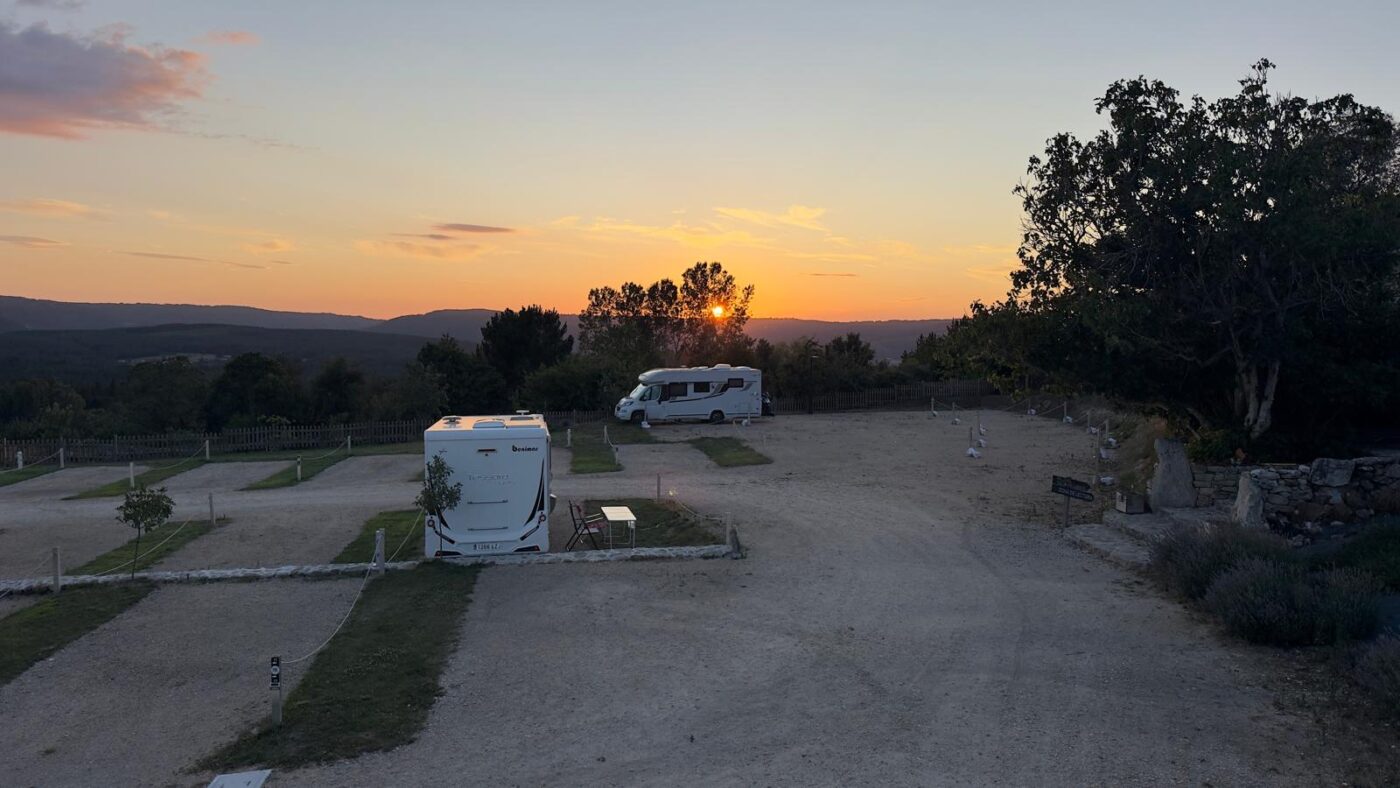
This is where the perfect solution comes in: a camper van route through the Ribeira Sacra gives you the key to unlock this region at your own pace, without relying on bus schedules or hotel availability. You can sleep overlooking the Sil canyons, wake up next to a thousand-year-old monastery, and decide on the fly whether today is for a catamaran ride, hiking, or hot springs.
In this post, we’re going to tell you how to organize a camper van route through the Ribeira Sacra step by step, with essential stops, overnight areas, plans for each day, and practical tips so your trip is as epic as the landscape. And the best part: everything is designed so you can enjoy it whether you’re an experienced traveler or it’s your first time in a camper van.
Why Is the Ribeira Sacra the Perfect Destination for Your Camper Van?
The Ribeira Sacra, split between the provinces of Ourense and Lugo, is one of those treasures that Galicia keeps inland. Its river canyons, carved by the Sil and Miño rivers, create a unique landscape in Spain: vertical walls over 300 meters high covered in terraced vineyards that defy gravity.
In a camper van, this special geography becomes an advantage. You can access spectacular viewpoints, park near the catamaran docks, and sleep in natural settings that traditional hotels can’t offer. Plus, the Ribeira Sacra is a quiet area with few crowds (except on holiday weekends), making it ideal for traveling with your home on wheels.
The bonus? Gastronomy and wine. The Mencía variety is the queen here, and tasting it directly from the production area, with views of the canyons, is an experience you won’t forget.
Plan Your Camper Van Route Through the Ribeira Sacra: How Many Days Do You Need?
For a camper van route through the Ribeira Sacra that’s truly worthwhile, we recommend dedicating between 4 and 5 days. This gives you time to explore without rushing, do some hiking, take the catamaran ride, and enjoy the viewpoints at a leisurely pace.
If you have less time, you can see the essentials in 3 days, but you’ll be more pressed for time. If you have a week, you can combine the Ribeira Sacra with the Ourense hot springs or even make a getaway to nearby Puebla de Sanabria in Zamora.
In this article, we propose a 5-day itinerary that covers the key points, but if you only have 3 days, you can focus on days 1, 2, and 5, which concentrate the must-see sights.
Day 1: Sil Canyons and Parada de Sil
The best way to start a camper van route through the Ribeira Sacra is to dive straight into its heart: the Sil River canyons. From Ourense city, take the OU-536 road towards Parada de Sil, a municipality that will be your perfect base for the first day.
Catamaran Ride Through the Sil Canyons
The star experience is the catamaran ride that tours the canyon. They depart from the Santo Estevo or Santa Cristina docks. The journey lasts approximately an hour and a half and lets you see the impressive vertical vineyards and monasteries perched on the cliffs from the water.
It’s a plan that delights families with children, couples, and groups of friends. During the ride, they explain the history of the area, how grapes are grown on those impossible slopes, and the importance of the river in the lives of the locals.
The camper van parking area is close to the dock, so you won’t have problems leaving your vehicle while you enjoy the ride.
Must-See Viewpoints in the Parada de Sil Area
After the catamaran, it’s time to head up to the viewpoints. These are the ones you can’t miss:
Balcones de Madrid Viewpoint
Possibly the most spectacular in all of Galicia. From here you see a meander of the Sil with vineyards plunging down towards the river. The name comes from the fact that the terraces seem to lean over the void like balconies of a vertical city.
Cabezoás Viewpoint
Less well-known but equally impressive. It offers a panoramic view of the canyons and vineyards in all their extension. It’s perfect for sunset photos.
Vilouxe Viewpoint
Another strategic spot to see the Sil meander. It has a rest area where you can stop to eat something with the best views.
Santa Cristina Monastery
This monastery, located on the banks of the Sil, is one of the most photogenic in the Ribeira Sacra. It was built in the 12th century and its location, almost at the water’s edge, will help you understand why the monks chose these settings for their contemplative lives. Today, you can visit its ruins and the church, and the surroundings are perfect for a peaceful walk.
Overnight in Parada de Sil: Free Area
For spending the night, there is a free camper van area in Parada de Sil (coordinates: 42°22’28.9″N 7°25’05.1″O). It’s municipal, well-located, and allows 48-hour stays. It has basic services, making it an excellent option for the first night.
Day 2: Castro Caldelas, Castle, and Magical Forests
On the second day of your camper van route through the Ribeira Sacra, you head to Castro Caldelas, a village declared a historic-artistic ensemble. It’s about a 40-minute drive from Parada de Sil via the OU-536, a winding road but with landscapes that will keep you awake.
Old Town of Castro Caldelas
Stroll through its cobbled streets, especially Calle Sol and Calle Grande. They are the essence of the village: stone houses with wooden balconies, small shops, and a peaceful atmosphere that invites you to get lost without rushing.
Castle of Castro Caldelas
Visiting the castle is essential. For just 2 euros (children enter free), you can explore this medieval fortress that dominates the village from above. Inside, it houses an archaeological and ethnographic museum that provides context on the area’s history. In the summer months, opening hours are from 10:00 AM to 2:00 PM and 4:00 PM to 8:00 PM; in winter, it closes a bit earlier.
As Penas de Matacás Viewpoint
Less than 15 minutes by camper van from the center, this viewpoint offers impressive views of the Sil Canyons. It’s less well-known than those in Parada de Sil, but equally spectacular, and usually quieter.
Dos Bosques Máxicos Route
If you like hiking, this route is a gem. It has several options: from a 5-kilometer route (ideal for families) to the full 20-kilometer circular route for the more adventurous. It passes through oak and chestnut forests, small waterfalls, and natural viewpoints. It’s one of the most beautiful routes in the Ribeira Sacra and doesn’t require being a mountain expert.
Overnight Area in Castro Caldelas
The Castro Caldelas camper van area is municipal and free (coordinates: 42°22’28.9″N 7°25’05.1″O). It has 9 spaces and allows 48-hour stays. Being small, it’s advisable to arrive early, especially on weekends. It has basic services and is close to the center.
Day 3: A Veiga, Nature, and Astronomy
We dedicate the third day to A Veiga, a municipality in the Ourense mountains that borders Zamora. It’s a wilder area, with less tourism and spectacular nature. From Castro Caldelas, take the OU-536 and then the OU-636 to reach A Veiga.
What to See in A Veiga
This municipality is a paradise for nature lovers. These are the places you can’t miss:
Trevinca Astronomical Center
It’s one of the best places in Galicia to observe the night sky. They offer guided tours and observation sessions with professional telescopes. If you’re traveling in a camper van, it’s a great plan for the night: you park, wait for darkness to fall, and let yourself be amazed by the stars. It’s advisable to book in advance.
Valdín Viewpoint
From this point, you have views of the Trevinca mountain range and the surrounding valleys. It’s a completely different landscape from the canyons, more alpine and wild, showing you the diversity of the Ribeira Sacra.
O Coiñedo and Dos Franceses River Beaches
If the weather cooperates (and in Galicia you never know), these river beaches are perfect for a swim. They are on the Bibei River and have crystal-clear waters and grassy areas for picnics. They are very popular among locals in summer.
Nosa Señora das Hermidas Sanctuary
A small but charming sanctuary, surrounded by forest, dating from the 18th century. It’s a place of peace and tradition, perfect for a rest stop (or just to disconnect for a while).
Cántara da Moura and Peña Trevinca
Cántara da Moura is a Roman bridge over the Bibei River, very photogenic and with a history that locals tell with pride. And if you’re a hiker, Peña Trevinca (2,127 meters) is Galicia’s roof. Summiting it is a demanding route but rewards you with 360-degree views. That said, it requires a full day and good physical condition.
Overnight in A Veiga
A Veiga doesn’t have a specific camper van area, but it’s possible to overnight in designated areas near the center or around the river beaches (always respecting the rules). Ask at the town hall or the Astronomical Center for the best options.
Day 4: Puebla de Sanabria, a Day in Castilla y León
A Veiga is a stone’s throw from the province of Zamora, and one of its greatest attractions is Puebla de Sanabria, a medieval village that looks like it came out of a fairy tale. Take advantage of a day trip, as it’s only a 30-minute drive away.
Sanabria Natural Park and Lake
Lake Sanabria is the largest glacial lake in the Iberian Peninsula. The landscape, surrounded by mountains and oak forests, is amazing. You can park your camper van in designated areas, but remember that overnight stays are not allowed in the Natural Park, so you’ll have to return to A Veiga or find an area nearby (there are some on the outskirts).
Castle of the Counts of Benavente and Historic Center
The castle of Puebla de Sanabria is a 15th-century fortress that stands imposingly over the village. Entrance costs 3 euros and includes the museum of giants and big-heads and the mycology school. The old town is small but charming, with Plaza Mayor as the nerve center, surrounded by stone houses with flower-filled balconies.
Iberian Wolf Center
If you’re traveling with children, the Iberian Wolf Center is a must-visit. Created by Félix Rodríguez de la Fuente, it offers guided tours of the museum and the chance to see wolves in semi-freedom. Entrance costs 8 euros and it’s an educational and exciting experience.
Return to the Ribeira Sacra
After spending the day in Zamora, return to Ourense to continue your route. You can spend the night at the Monforte de Lemos camper van area, which is the one we’ll use the next day.
Day 5: Monforte de Lemos, the Gateway to the Ribeira Sacra
We dedicate the last day of your camper van route through the Ribeira Sacra to Monforte de Lemos, considered the gateway to the region and a city with an impressive historical heritage.
Torre del Homenaje (Keep Tower)
It’s the tallest medieval tower in Galicia, at 35 meters. It stands next to the palace of the Counts of Lemos and the San Vicente monastery. Climbing the tower gives you a panoramic view of the city and the Cabe valley.
San Vicente del Pino Monastery and Palace of the Counts
The monastery, now owned by the Escolapios order, is an imposing building that combines Romanesque, Gothic, and Renaissance styles. The Palace of the Counts, attached to the monastery, has an inner courtyard and garden worth visiting. The combined entrance costs 5 euros.
Galicia Railway Museum
A perfect plan if you’re traveling with children (or if you like trains). This museum has an impressive collection of old locomotives and carriages. Entrance costs 4 euros for adults and 2 euros for children. They also have a miniature train that does a circuit outside for just 1 euro. It’s an activity that delights both the little ones and the adults.
Historic Center and Jewish Quarter
Monforte de Lemos had an important Jewish quarter in the Middle Ages. Wander through Zapaterías and Pescaderías streets, Plaza de España, and the remains of the city wall. It’s a historic walk that transports you to another time. And don’t forget the Old Bridge over the Cabe River, which has witnessed the city’s history for centuries.
Monforte de Lemos Camper Van Area
The Monforte de Lemos camper van area (coordinates: 42°31’39.5″N 7°30’43.5″O) is one of the best in the area. It has 20 spaces, allows 48-hour stays, and is close to the center. It’s municipal, so the cost is very reasonable. Perfect for your last night in the Ribeira Sacra.
Where to Sleep with Your Camper Van in the Ribeira Sacra: Areas and Camping
On a camper van route through the Ribeira Sacra, sleeping well is key. In addition to the municipal areas we’ve mentioned, you also have the option of using Camping Solpor, which, although located in Lugo, is an excellent base for exploring the northern part of the Ribeira Sacra. It’s in Chantada, on the banks of the Miño River, and offers camper van pitches with all services: electricity, water, drainage, swimming pool, and children’s area. It’s the ideal option if you’re looking for more amenities, especially if you’re traveling with children or in high season, when free areas may be full.
Remember that in Galicia, overnight rules vary by municipality. In general, designated areas are the best option to avoid problems. If you use camper van rental in Madrid, ask the company for specific recommendations for the area, as they usually have up-to-date information.
Practical Tips for Your Camper Van Route Through the Ribeira Sacra
Before heading out, keep these expert tips in mind to make your trip a success:
Best Time of Year
Spring and autumn are the star seasons. The landscape is green and the colors of the vineyards are spectacular. In summer it’s hot, but camper van areas and viewpoints get crowded, and in winter it can be cold and rainy, although the canyons have a special charm with fog.
How to Get Around with a Camper Van
The roads in the Ribeira Sacra are, for the most part, narrow and winding. Don’t worry, a 7-meter camper van can travel without problems on the main roads (OU-536, OU-636, LU-903). But to access some viewpoints or the docks, the roads are narrower; go with caution and use common sense. Most cars and camper vans manage without issues.
Water and Supplies
Municipal camper van areas usually have water services and waste water and black water dumping. But in more rural areas, like A Veiga, there may not be as many options. Always carry enough water and plan stops for refueling and emptying.
Activity Reservations
The catamaran ride through the Sil canyons and visits to the Trevinca Astronomical Center are often in high demand. Book a few days in advance, especially if you’re traveling on a weekend or in high season. This ensures you get the day and time that suits you best.
Frequently Asked Questions About the Camper Van Route Through the Ribeira Sacra
Is it easy to get around by camper van in the Ribeira Sacra?
Yes, it’s perfectly feasible. The main roads are well-paved and signposted. The camper van areas are sufficient for normal demand. The only sections that require more caution are the access roads to some viewpoints or the docks, but if you use Google Maps or Waze in advance, you won’t have problems. A camper van up to 7 meters long can travel on practically all the routes.
How many days do you need to see the Ribeira Sacra by camper van?
With 4 or 5 days, you have time to see the most important sights without rushing: the canyons, the monasteries, the main viewpoints, and a couple of hiking routes. If you only have 3 days, focus on Parada de Sil, Castro Caldelas, and Monforte de Lemos, which are the must-sees. With 7 days, you can add A Veiga and the getaway to Puebla de Sanabria, and do some longer hiking routes.
Which wine from the Ribeira Sacra should I try?
The queen grape is Mencía, which produces young, characterful red wines with notes of red fruits and a mineral touch that reflects the slate soil. Whites are also produced with the Godello variety, very fresh and aromatic. Don’t leave without doing a tasting at one of the area’s wineries; many offer tours with tastings. And if you like wine, note this: the Ribeira Sacra is a Denomination of Origin with a lot of personality.
Your Camper Van Route Awaits
Exploring the Sil and Miño canyons, sleeping in areas with views, discovering thousand-year-old monasteries, and savoring Mencía wine directly from the land that saw it born: that’s what awaits you on your camper van route through the Ribeira Sacra. It’s a journey to be enjoyed slowly, without rushing, letting yourself be carried away by the landscapes and the stories hidden in its stones.
Ready to live this adventure? If you don’t have your own camper van, remember that at Autocaravanas Camperdadi we offer a camper van rental in Madrid service with vehicles prepared for this type of route. We advise you on the most suitable model for your trip and give you tips on the route. Call +34 91 082 06 32 or send a WhatsApp to +34 639 266 865 to resolve all your questions. Or write to us at info@autocaravanascamperdadi.com and we’ll help you design your trip.