


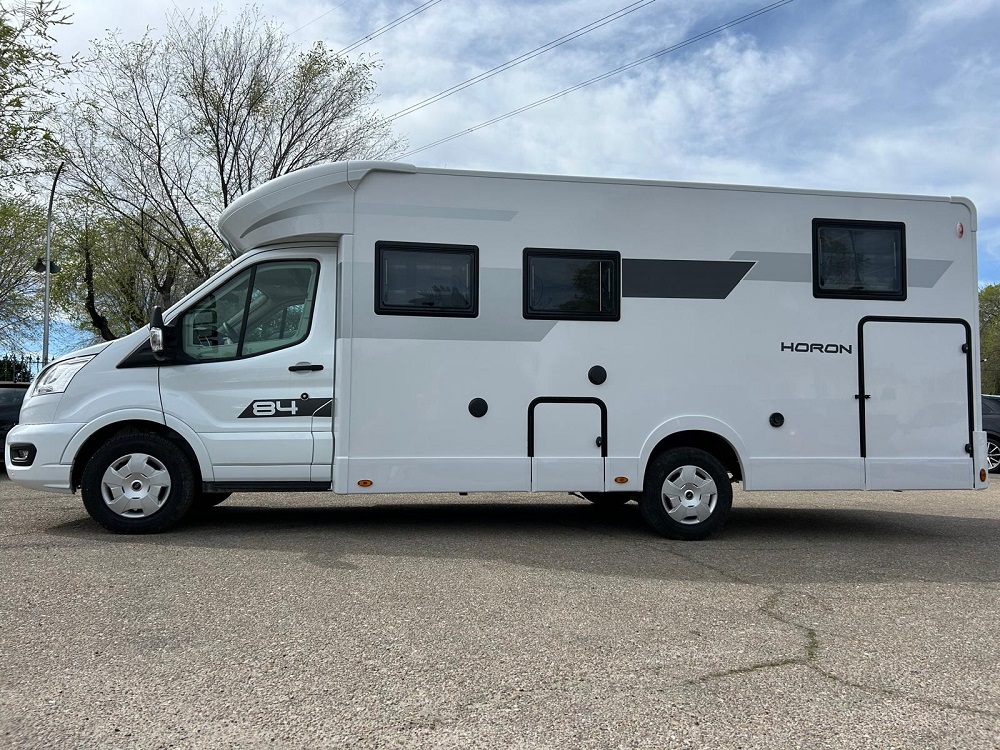
Did you know that sleeping inside your properly parked motorhome is completely legal, but taking a chair outside could cost you a fine of up to 1,000 euros? The line between a peaceful night and a penalty is very thin, and in 2026 the Spanish Directorate-General for Traffic (DGT) has published a regulation that defines it clearly. This guide explains, step by step, the new DGT 2026 regulations for motorhomes: parking and overnight stays without fines, so you can travel with total peace of mind.
What is Instruction PROT 2026/04 and why does it affect you?
On March 11, 2026, the DGT published Instruction PROT 2026/04, signed by its director Pere Navarro. This instruction replaces the previous version from 2023 and updates the criteria on how motorhomes and camper vans should be used in Spain.
It’s important to understand that it is not a new law. It is an official interpretation that organizes what was already stated in the General Traffic Regulations and case law. Its great value is unifying the criteria so that each local police force doesn’t interpret the rule in its own way, which was exactly what generated arbitrary fines.
The update comes amid a boom in wheel-based tourism. The number of motorhomes in Spain has almost tripled in a decade, going from about 48,000 vehicles in 2015 to around 137,000 today. This growth explains the pressure on beaches and tourist areas and, with it, the need for common rules.
Parking, overnight stays, and camping: the difference that avoids the fine
Here is the heart of the matter. The DGT summarizes it like this: a properly parked motorhome is just another vehicle and is governed by the same rules as any car. The fact that its occupants are inside —resting, eating, or sleeping— is irrelevant to Traffic authorities.
Let’s define the three concepts without technical jargon:
- Parking: immobilizing the vehicle in a permitted area. It’s a maneuver regulated by traffic regulations.
- Overnight stay: sleeping inside the parked vehicle. It does not alter its parked status if you don’t take anything outside.
- Camping: setting up “life” outside the vehicle. It’s an activity regulated by tourism regulations and local ordinances, not by traffic rules.
The two official requirements that keep you “parked”
The instruction establishes two conditions that separate parking from camping. As long as you comply with them, you remain protected by traffic regulations:
- The vehicle, with the engine off, only touches the ground through its wheels (without stabilizer legs or other devices, except for safety chocks on slopes).
- It does not occupy more space than when closed, meaning without deploying chairs, tables, awnings, or anything that protrudes beyond its perimeter.
Parking is not camping: if everything is stowed away and you only touch the ground with your wheels, sleeping inside is legal.
Quick table: what you can and cannot do
| Action | Allowed while parked? |
|---|---|
| Park like any car, within the parking space | Yes |
| Sleep or stay overnight inside the vehicle | Yes |
| Cook or rest inside | Yes |
| Take out a table, chairs, or awning onto the public way | No (it’s camping) |
| Lower stabilizer legs to the ground | No (only chocks on slopes) |
| Dump grey or black water onto the street | No (environmental fine) |
What you should NOT take outside if you want to remain “parked”
This is the point that avoids the most fines. The moment anything from your vehicle invades the public space beyond its perimeter, you are no longer parked and are now camping. To be clear, avoid the following when parking on public roads:
- Awnings, slide-outs, swing-out windows or any element that protrudes from the vehicle.
- Tables, chairs or any furniture on the street.
- Stabilizer legs resting on the ground (only safety chocks are allowed).
- Liquid dumping: clean water, grey water or black water (only what comes out of the exhaust pipe is permitted).
- Annoying noise, such as a generator running during rest hours.
The gesture that marks the border: If you lower the legs and unfold the awning “just to get some shade,” you are no longer parked: you are camping, and that’s where the fine begins. The golden rule is to travel with everything stowed away whenever you are on the street.
Where you can park and stay overnight in a motorhome (and where you cannot)
Now that you know you can stay overnight without camping, the next question is where to do it with peace of mind. As a general rule, you can park and sleep anywhere where parking is allowed and there is no local restriction. But there are sensitive areas where you need to be extra careful:
- Public maritime-terrestrial domain: beaches, seafront promenades, and protected areas. Here the Coastal Law applies, which prohibits camping and limits parking.
- National parks and protected natural areas: prohibited except in expressly designated areas.
- Interurban roads: you cannot stay overnight on the shoulder of a road.
- Places with specific signage: if a sign prohibits it, respect it.
The safest option, especially in high season on the coast, is to use a designated motorhome area or a campsite. They have services (water, electricity, and dumping point) and eliminate any legal doubts.
The role of town councils: the big novelty of 2026
If anything distinguishes this instruction from the previous one, it is the reinforcement of municipal powers. The regulation is now more local than ever, and this is the change that generates the most doubts among travelers.
The criteria are based on the Supreme Court, which in its ruling of March 13, 2018 —regarding the ordinance of Sanxenxo (Pontevedra)— endorsed that a municipality can limit parking times and prohibit motorhome camping for public interest reasons: traffic flow, neighborhood rest, equitable distribution of parking, or environmental protection.
However, there is an important limit in your favor. A town council cannot generically prohibit your parking just because you are a motorhome: the principle of equality between vehicles applies. What it can do is limit times or prohibit camping in certain areas. The practical consequence is simple: always check the municipality’s ordinance before spending the night.
MOT, S-128 sign and other practical changes in the DGT 2026 regulations
In addition to clarifying overnight stays, the instruction adjusts other useful day-to-day aspects.
MOT deadlines according to vehicle type
One of the points that is most clarified is how often you need to pass the inspection, which is not the same for all camper vehicles:
| Vehicle type | MOT frequency |
|---|---|
| Motorhome (category M) | Exempt until 4 years · every 2 years from 4 to 10 · annual after 10 |
| Camper van (category N) | Annual until 10 years · every 6 months after 10 |
As you can see, camper vans have a stricter MOT requirement than motorhomes. This is an important point to consider if you are thinking of buying an older converted van.
The new S-128 sign
The instruction officializes the S-128 sign, which indicates the location of a waste water dumping point for motorhomes and caravans. Seeing it on the road is a quick way to locate where to manage your tanks legally and responsibly.
How to travel with peace of mind: checklist before parking
The good news is that complying with the regulations is easy once you internalize the logic of “parking is not camping.” Before spending the night, review this mental checklist:
- Am I in an area where parking is allowed and there is no sign prohibiting it?
- Have I checked the municipal ordinance if it’s a tourist or coastal area?
- Is everything stowed away: awning, chairs, table, and stabilizer legs up?
- Does the vehicle occupy only its space, without protruding?
- Am I going to manage wastewater at a dumping point and not on the street?
Frequently Asked Questions (FAQs)
Can I sleep in a motorhome parked on the street?
Yes. Instruction PROT 2026/04 confirms that sleeping inside a properly parked motorhome is considered parking, not camping, as long as you don’t deploy anything outside, don’t use stabilizer legs, and don’t dump fluids. The fact that you are inside resting is irrelevant to Traffic authorities.
What is the difference between parking and camping according to the DGT?
You are parked if the vehicle only touches the ground with its wheels and does not occupy more space than when closed. You are camping as soon as you take out an awning, tables, or chairs, lower the stabilizer legs, or dump liquids. At that moment, you cease to be governed by traffic regulations and fall under tourism regulations and local ordinances.
Can a town council prohibit parking my motorhome?
It cannot prohibit it generically just because it’s a motorhome, due to the principle of equality between vehicles. But it can limit parking time or prohibit camping for public interest reasons through an ordinance, a power endorsed by the Supreme Court in its ruling of March 13, 2018.
Ready to start your route without worrying about mechanics or paperwork? Discover our fleet of state-of-the-art motorhomes at Autocaravanas Camperdadi. We help you plan your trip from start to finish. Contact us by phone at +34 91 082 06 32, send us a WhatsApp at +34 639 266 865, or email us at info@autocaravanascamperdadi.com to resolve all your questions and start your next great adventure on wheels.