


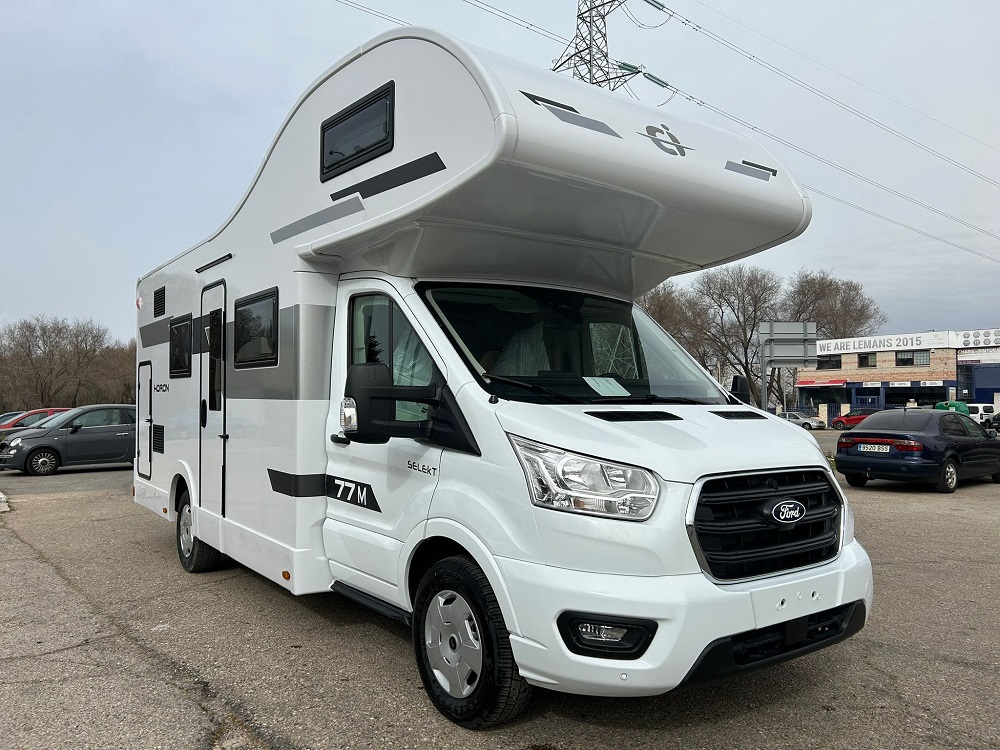
Did you know that on August 12, 2026, the sky over Spain will go completely dark for the first time in over 120 years, and that the best way to experience it is on wheels? Hotels in the path of totality are already fully booked and prices have skyrocketed, but those traveling by motorhome have one advantage: they can move freely to find the best observation point without depending on reservations or expensive accommodation. This guide shows you where to see the solar eclipse in a motorhome, with the best locations, practical tips, and everything you need to know to not miss this unique spectacle.
The eclipse of the century: what, when, and why it’s so special
On August 12, 2026, the Moon will pass between the Sun and Earth, creating a total solar eclipse visible from northern Spain. The phenomenon will begin around 7:20 PM and reach totality near 8:30 PM, just before sunset. Experts call it a “sunset eclipse” because the Sun will be very low on the horizon when the Moon completely covers it.
Spain hasn’t seen a total eclipse since 1905, and this is the first in a historic series of three eclipses that will occur between 2026 and 2028. The path of totality will cross the country from northwest to southeast, from Galicia to the Balearic Islands, passing through numerous provincial capitals.
The path of totality: map and best areas
The path of totality is the narrow band where the Moon will completely cover the solar disk. Outside of it, the eclipse will appear partial, no matter how spectacular the percentage of coverage. To experience the full event —day turning to night, the solar corona, the diamond ring— you need to be within that band.
The best places to see the eclipse in a motorhome are those that combine three things: being close to the central line of totality (longer duration), having a clear western horizon, and having areas where you can park and stay overnight without problems.
Galicia: the first point of contact
The eclipse will arrive first in Galicia. In A Coruña, totality will last 76 seconds and the Sun will be 12 degrees above the horizon when it occurs. The coastal viewpoints, such as Monte de San Pedro or the area around the Tower of Hercules, offer clear horizons towards the Atlantic.
Asturias and Cantabria: dream landscapes
The Cantabrian coast offers some of the most spectacular settings. In Oviedo, totality will be visible with the Sun setting over the sea. In Cantabria, El Puntal beach, near Santander, is a sandbar that extends into the sea with views to the west-northwest, ideal for viewing the eclipse without obstructions.
Castilla y León: the best minutes of darkness
This region is one of the great privileged ones. The central line of totality passes very close to Aranda de Duero (Burgos), where darkness will last more than a minute and a half. León, Palencia, Soria, and Burgos are capitals where the eclipse will be seen in all its splendor. The plateau offers open horizons and clear skies, perfect for astronomical observation.
La Rioja: vineyards and starry skies
The Riojan plateaus combine altitude, clear horizons, and a wide network of motorhome areas. It’s a perfect mix for the eclipse. The plateaus near the Sierra de la Demanda and those of Foncea offer 360-degree views with very little light pollution.
Zaragoza and Aragon: guaranteed clear skies
The Ebro valley, with its dry climate and mostly clear skies in August, is one of astronomers’ favorite places. In several municipalities near Zaragoza, totality will reach nearly one minute and forty seconds. Teruel will also enjoy privileged conditions.
Valencia and Castellón: the end of the road
Valencia will be one of the key points, with totality visible for about 60 to 70 seconds from 8:32 PM. The interior of Castellón, especially regions like Els Ports or Alto Maestrazgo, has low light pollution and wide horizons.
Balearic Islands: the last breath
The eclipse will end its journey in the Balearic Islands. In Palma, totality will occur with the Sun only 2 degrees high, so it’s essential to find an elevated point with a completely clear western horizon. In Mallorca, the Serra de Tramuntana offers spectacular viewpoints.
Where to park and stay overnight in a motorhome to see the eclipse
The great advantage of traveling by motorhome is that you don’t depend on hotels or reservations, but you need to plan where you’re going to park and sleep. The 2026 DGT regulations (Instruction PROT 2026/04) are clear: you can stay overnight inside your parked vehicle as long as you don’t take anything outside.
You are parked if:
- The vehicle only touches the ground with its wheels (without stabilizer legs).
- It does not occupy more space than when closed (without awnings, chairs, or tables deployed).
The moment you lower the legs or take out a chair, you are camping, and that is no longer regulated by the DGT but by municipal ordinances.
Recommended motorhome areas near the path of totality
Here are some strategic areas to park your motorhome and watch the eclipse from the front row:
| Zone | Location | Recommended area | Services |
|---|---|---|---|
| Burgos | Aranda de Duero | Municipal motorhome area | Water, dumping, electricity |
| Zaragoza | Daroca | Camping Daroca (50 spaces) | €12/day, bar, washing machine |
| Zaragoza | Jaraba | La Viuna area (11 spaces) | Water, grey and black water dumping |
| Zaragoza | Gallocanta | Camping Car Park | €6, next to the lagoon |
| Zaragoza | Ateca | Municipal area (5 spaces) | Free, 48h maximum |
| La Rioja | Haro | Motorhome area | Water, dumping |
| La Rioja | Logroño | Municipal area | Complete, near the center |
| Tarragona | Altafulla | Park4Night (various points) | Quiet areas near the beach |
To find more options, use apps like Park4Night or check the ÁreasAC database.
Practical tips for eclipse day in a motorhome
The eclipse coincides with peak summer and more than 10 million trips are expected throughout Spain. To make your experience unforgettable (and not chaotic), follow these tips:
Arrive early
Experts recommend arriving at your destination one or two days in advance. This way you’ll avoid traffic jams and can explore the area to find the perfect observation point. The best-located motorhome areas will fill up quickly.
Look for a clear western horizon
The eclipse will be visible at sunset, with the Sun very low. You need a place without mountains, buildings, or trees blocking the view towards the west. Coastal viewpoints, plains, and plateaus are the best options.
Certified glasses, always
Never look directly at the Sun without protection. Regular sunglasses are not enough. Only eclipse glasses with ISO 12312-2 certification are safe. Use them during all partial phases, including the “diamond ring.” You can only take them off during the seconds of total totality.
Prepare supplies
Fill the fuel tank, bring enough water and food for the whole day. Don’t rely on finding supermarkets open near your observation point.
Respect the environment
Don’t camp in protected areas, don’t leave waste, and don’t light fires. In August, the risk of wildfires is at its highest.
Beyond the eclipse: the Perseid meteor shower
The night of August 12 is also the night of the Perseid meteor shower. After the eclipse, the sky will darken and you’ll be able to enjoy the famous “tears of San Lorenzo” from the same place where you watched the eclipse. A perfect plan to extend the evening.
Frequently Asked Questions (FAQs)
Where will the total solar eclipse be visible in Spain?
The path of totality will cross Spain from west to east, from Galicia to the Balearic Islands. It will pass through A Coruña, Oviedo, León, Burgos, Palencia, Soria, Bilbao, Zaragoza, Valencia, Castellón, and Palma de Mallorca, among many other locations.
What time will the eclipse be visible on August 12?
The eclipse will begin around 7:20 PM and totality will occur near 8:30 PM, just before sunset. The duration of totality varies by location, from a few seconds to almost two minutes.
Can I sleep in my motorhome to see the eclipse?
Yes, you can stay overnight inside your parked motorhome as long as you don’t take anything outside, don’t use stabilizer legs, and don’t occupy more space than the closed vehicle. DGT regulations distinguish between parking (legal) and camping (regulated by municipal ordinances).
Ready to experience the eclipse of the century on wheels? At Autocaravanas Camperdadi we have the perfect fleet so you don’t miss a single second of this unique spectacle. Contact us by phone at +34 91 082 06 32, send us a WhatsApp at +34 639 266 865, or email us at info@autocaravanascamperdadi.com and start planning your route into the darkness.